
What Is a Patent and What Is an Invention?
What the Legal Definitions Actually Teach Us
Most explanations of patents begin with definitions.
Unfortunately, they often stop there.
In practice, the value of a definition lies not in memorising it, but in understanding how patent offices interpret it and what inventors usually misunderstand when relying on it.
This page looks at the legal meaning of patent and invention under Indian law, and more importantly, what those definitions imply in real situations.
What Is a Patent Under Indian Law?
Under the Indian Patents Act, 1970, a patent is a statutory right granted for an invention. This right allows the patentee to exclude others from making, using, selling, offering for sale, or importing the patented invention within India for a limited period, subject to conditions.
The emphasis here is on exclusion, not permission. A patent does not give you the right to practice an invention freely in all circumstances. It gives you the right to prevent others from doing so. This distinction becomes important in regulated industries, collaborative technologies, and crowded technical fields.
A patent is a government-granted right that gives exclusive ownership of an invention for a limited time. It allows the patentee to control who can use, make, sell, or import the invention. Obtaining a patent offers various financial advantages, such as earning royalties through licensing, building a business without competition, raising capital, or selling the patent.
In our practice, this misunderstanding frequently leads inventors to overestimate what a patent alone can achieve.
What Is an Invention?
The Indian Patents Act defines an invention as “a new product or process involving an inventive step and capable of industrial application.”
Each part of this definition matters.
An invention must be new, meaning it must not have been disclosed anywhere in the world before the filing date. It must involve an inventive step, meaning it must not be obvious to a person skilled in the relevant technical field. And it must be capable of industrial application, meaning it must be capable of being made or used in an industry.
What is often missed is that all three requirements must exist together. Fulfilling only one or two is not sufficient.
What “New” Really Means in Practice
Many inventors assume novelty means “new to them” or “not available in the Indian market.”
That is incorrect.
Novelty is assessed globally and includes:
- Patent publications
- Academic papers
- Product manuals
- Conference presentations
- Online disclosures
- Public use or demonstrations
In examination reports issued by the Indian Patent Office, lack of novelty is frequently raised because applicants underestimate how broadly prior disclosures are interpreted.
What an Inventive Step Is (and Is Not)
Inventive step is the most misunderstood requirement. An invention does not need to be revolutionary. It also does not need to be complex. However, it must not be an obvious modification of what already exists.
In real examination practice, objections often arise not because the invention lacks merit, but because the application fails to clearly articulate why the improvement is not obvious. Inventive step is assessed from the perspective of a skilled person, not from the inventor’s effort or investment.
Industrial Applicability Is About Practical Use, Not Commercial Success
Industrial applicability does not mean the invention must already be manufactured or profitable.
It simply means that the invention must be capable of being made or used in some form of industry. This includes manufacturing, services, agriculture, and technology-based industries.
We frequently see inventors delay filing because they believe a working model or commercial validation is required. In most cases, it is not.
What the Definition Does Not Say (But the Law Implies)
The legal definitions do not explicitly state several practical realities, but examination practice makes them clear.
A patent is granted based on how well an invention is described, not on how good the idea sounds.
An invention is evaluated on technical contribution, not business potential. Disclosure quality often matters more than complexity.
These points are not obvious from the bare definition, but they consistently emerge during prosecution.
Why Definitions Alone Are Not Enough
Relying only on definitions often leads to incorrect decisions such as:
- Filing too late
- Filing too broadly
- Filing without understanding prior art
- Abandoning patenting too early
Definitions set the legal framework, but outcomes depend on how those definitions are applied by examiners.
A Practical Way to Read the Definition
In practice, we advise inventors to read the definition of invention backwards:
- Can this be used or made in industry?
- What exactly is new compared to what exists?
- Why would a skilled person not arrive at this solution easily?
If these questions can be answered clearly, the invention is usually worth deeper evaluation.
The definitions of patent and invention are deliberately concise. They are not meant to teach strategy. Their real value lies in what they exclude, not what they promise.
Understanding these definitions properly helps inventors avoid unrealistic expectations and focus instead on what patent law is actually designed to protect: specific, technical contributions that advance the existing state of knowledge.
Advantages of a patent for your invention

Owning an intellectual property has some similarities with owning any other form of tangible property like a real estate. So, what are the advantages of having a real estate property on your name?
- You can rent it
- You can sell it
- You can stop others from using the real estate without your permission
- You can use the real estate for your purpose (business or residence)
on similar terms, the patent is an intellectual property and has all the advantages stated above, but you need to claim it to be on your name, hence it is important to file of a patent application for your invention. and there is a difference though, unlike real estate the patent has the term of 20 years of ownership.
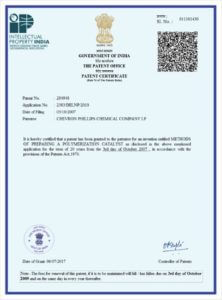
- You own exclusive rights for patented invention for a given time (20 years from the filing of patent application)
- You can use it to build a business around patented invention and not worry about competition
- You can rent it (in this case license the patented invention) to existing businesses
- Exclude others for using, selling, offering for sale, and importing your patented invention in India
- You can completely sell the patent to other company
hence this gives a unique advantage to the patent owners which can be leveraged to have a complete monopoly and competitive advantage from the competition and in certain cases having patent may also help in raising capital for business !!!
Imagine what it would be like when:
- You have exclusive rights for your invention (idea, project, product, etc.) and you can stop others from using your invention for commercial purposes for 20 years from the filing date.
- You can make a significant return on your investments that you made for research and development and patenting your invention by ways like
- licensing your patent to other companies,
- building business around your invention, or
- completely selling it to other companies.
- You will have better chances of getting funding for your idea, business, product, etc. If it is protected by patents, investors clearly see how they can have a monopoly in the market by having a patented product for the business.
- You and your business are perceived as an expert in the industry when you have a patent. This helps in finding great employees, partners, financiers, and clients too.
Ultimately it enhances your market value.
Most people believe that, Patents are given to only groundbreaking (landmark) and complex invention that changes the world, which is not true !!!
In reality, patents are also granted to incremental inventions !!! Inventions that have a novel solution to a technical problem, may that problem be small (but significant to form an inventive step and clear non-obviousness test).
What that means is, most of the part of your solution may be already known to the public (that is available in the market, patented or published in journals) but you might have come up with something (an inventive step) that is not an obvious solution to a normal person skilled in that domain and solve a very small problem in existing solutions. In this such case, the inventor still can win a patent for his invention if other patentability criteria’s are mate by his invention
Many inventors getting discouraged by seeing something similar to their invention in the market, published or known to the public… what they fail to realize is they may still have novelty and inventive step in their invention although apparently, it looks similar to things already known to the public.
Don’t get discouraged if you see things already in the market, published or known to the public which are somewhat similar to your invention… You still may have something in your invention that can win a patent.
This is beautifully explained in our section on the “Step 1 : from idea to invention disclosure”.

- For over 18 years, Prasad has helped protect the intellectual property rights (IPR) of more than 1800 clients, and 15000+ inventor interactions, including individuals, entrepreneurs, and educational institutes. This includes patents, trademarks, designs, and copyrights.
- Patent Facilitator under Startup India initiative of Government of India
- Bachelor’s degree in Electronics and Telecommunication Engineering
- Extensive experience handling inventions across multiple technology sectors including AI & Machine Learning, Software and IT, Blockchain & FinTech, Electronics, Mechanical and Automotive technologies, Medical Devices, Semiconductors, Electrical systems, and Industrial Automation.
- Author of multiple books on patents used as reference books by institutes, including “How to Patent an Idea in India”, recognized by Amazon as a “Memorable Business Book of 2018”
- links to all videos - August 6, 2025