
Step 7 : Grant of patent
The grant of a patent refers to the official issuance of a patent by the patent office, providing legal protection and exclusive rights to the inventor. It signifies the recognition of the invention’s novelty, inventiveness, and industrial applicability, allowing the patentee to exclude others from making, using, or selling the patented invention without permission.
What Does “Grant of Patent” Mean?
A patent is granted when the Indian Patent Office is satisfied that your invention meets all legal requirements—novelty, inventive step, and industrial applicability.
- This stage comes after:
- Filing your patent application.
- Publication of the application.
- Examination by the Patent Office.
- Responding to objections in the First Examination Report (FER).
- Attending a hearing if required.
Only when all objections are cleared, the Controller of Patents issues an order of grant, and your invention officially becomes a patented innovation.
Legal Framework and sections of patent grant
The grant of patents in India is governed by the Patents Act, 1970. Specifically:
- Section 43 states that once all requirements are met, the patent shall be granted and entered in the Register of Patents.
- The grant is then notified in the Patent Journal, making it publicly accessible.
This step provides the inventor with legal rights that can be enforced against competitors.
What Happens After a Patent Is Granted?
Once your patent is granted, a few important things follow:
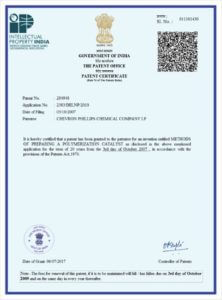
- You receive a patent certificate along with a unique patent number.
- Your patent is published in the official journal.
- Your details are entered into the Register of Patents.
- You now enjoy exclusive rights over your invention.
In simple terms, you have the legal authority to stop others from making, selling, using, or importing your invention without your permission.
Rights of a Patentee
The rights conferred by a granted patent include:
- Exclusive ownership for 20 years from the filing date.
- The ability to license or sell your patent to generate revenue.
- The right to take legal action against infringers.
- Stronger credibility with investors, partners, and customers.
This is why the grant stage is seen as the real turning point in the patent journey—it converts an idea into a marketable business asset.
Duration and Maintenance
- A patent is valid for 20 years from the filing date.
- To keep it alive, you must pay annual renewal fees from the 3rd year onwards.
- If the renewal is missed, the patent can lapse, though it may sometimes be restored.
Challenges After Grant
Even after a patent is granted, it can be challenged:
- Post-grant opposition – Any interested person can oppose the patent within 12 months of grant.
- Revocation proceedings – A patent can be revoked in court under certain conditions.
- Compulsory licensing – If the patent is not being worked in India or the invention is overpriced, a compulsory license may be issued.
This means the patentee must be proactive in defending and managing the patent.
Why the Grant Stage Matters
The grant of a patent opens up a world of opportunities:
- Monopoly rights over your invention.
- Revenue generation through licensing, sale, or technology transfer.
- Competitive advantage in the market.
- Enhanced brand reputation and trust by using the tag “Patented”.
- Stronger valuation for startups and companies in the eyes of investors.
A Practical Example
Consider a startup that invents a low-cost water purification system. Once the patent is granted:
- The startup can prevent larger companies from copying their technology.
- They can license it to manufacturers, earning steady royalties.
- The “patented technology” tag gives them stronger credibility with investors and customers.
This is how a granted patent protects innovation while creating direct business value.
The grant of a patent in India is the most critical stage in the patent process. It transforms your invention into an exclusive right and a powerful business tool. While the road to grant involves examination, objections, and hearings, the reward is long-term protection and commercial advantage.
At Patent Attorney Worldwide, we specialize in guiding inventors, startups, and companies through the entire patent process—from filing to grant, and beyond. With decades of expertise and thousands of successful patents handled, we ensure your innovation receives the protection and value it deserves.
| Responsibilities | ||
| Inventor |  | patent is granted to you. As per section 48 you get right to exclude others from using, selling offering for sale, importing your patented invention |
| Patent agent or attorney |  | Inform inventor about procedures, renewals and communication to patent office after patent granted |
| Patent office |  | grant or rejection the patent based on response to objections raised. Notify grant of patent in patent journal. |
Pre grant and Post grant opposition
The Pre-Grant opposition can be filed by any person who wants to oppose the invention disclosed in our patent application. There are no fees applicable for filing pre-grant opposition.
Post-grant opposition may be filed at any time after the grant of patent within one year from the date of publication of the patent. any person interested in field of the invention can file.
it is filed in the prescribed form 7 along with prescribed fees of Rs. 2400 or ( USD 29 ) for natural person, and 12,000 or ( USD 144 ) for others.
E-filing
| Particulars | Individual inventors Natural person(s) or Startup(s) or Small entit(y)/(ies) or educational institution(s) | Others |
| Notice of Opposition (Post-grant opposition) | 2400 or ( USD 29 ) | 12000 or ( USD 144 ) |
Physical Filing
| Particulars | Individual inventors Natural person(s) or Startup(s) or Small entit(y)/(ies) or educational institution(s) | Others |
| Notice of Opposition (Post-grant opposition) | 2640 | 13200 |
Patent renewal
After the grant of patent, you need to maintain the patent in force or alive by paying renewal fee every year as prescribed in the schedule I. For first two years, there is no renewal fee. The renewal fee is payable from 3rd year onwards. In case the renewal fee is not paid the patent will be cease.
http://www.ipindia.nic.in/writereaddata/Portal/IPOFormUpload/1_11_1/Fees.pdf
Video : AI based tool for patent commercialization, licensing and selling – Patent Forge AI full demo
How to make money from patent : patent commercialization
Again to summarize all the steps :
- Complete Steps and flow chart from Idea to granted patent
- Step 1 : from idea to invention disclosure
- step 2 : Filing patent application
- step 3 : Publication of application
- step 4 : Request for examination (RFE)
- step 5 : Examination of application
- step 6 : Response to objections or First Examination Report
- Step 7 : Grant of patent


- Indian Patent Office, Govt. of India
- Patent Facilitator for Start-ups, Startup India Govt. of India
- Bachelor’s degree in Electronics and Telecommunication engineering.
- Author of multiple books on Patents and IPR including a best-selling book on “How to patent an idea in India” which has been selected as the “Memorable Business Book of 2018” by Amazon
- Books are included in the syllabus of Educational Institutions as textbook and reference book on subject of IPR and Patents
- For over 15 years, Prasad has helped protect the intellectual property rights (IPR) of more than 1800 clients, including individuals, entrepreneurs, and educational institutes. This includes patents, trademarks, designs, and copyrights.
- links to all videos - August 6, 2025